
Tread is only half the story
Most people judge tires by tread depth. Tread tells you how much grip is left for the rain. It does not tell you how old the rubber is, and age matters just as much.
Inside a tire, the rubber compounds and the bonds between the layers slowly weaken as the tire ages. An old tire can look fine and then fail by tread separation, where the tread peels away from the body of the tire at speed. That is a loss-of-control risk, not just a flat.
Low-mileage cars are where this hides. A car that only goes to work, church, and the grocery store can age out its tires long before it wears out the tread. So can a truck that sits most of the week, or a weekend car.
How to read the date code
On the sidewall, find the letters DOT followed by a string of letters and numbers. The last four digits are the date the tire was made. The first two are the week and the last two are the year. So 2521 means the 25th week of 2021.
The full code is sometimes printed on only one side of the tire, and it may be the side facing the car. If you cannot find it, we will find it for you during any visit.
Check the date when you buy tires too. A new tire can sit in a warehouse for a while before anyone sells it. It is fair to ask for the date before the tires are mounted, and to ask for fresher ones if they have been sitting a long time.
Why heat speeds up aging
Heat is the biggest thing that makes rubber age faster. In Miami, tires get heat from the sun above, from the pavement below, and from inside the tire as it flexes on every rotation. There is no cool season to give them a break.
Low air pressure makes it worse. An underinflated tire flexes more, builds more heat, and wears on the outer edges. Pressure also changes with temperature, so check it in the morning before you drive, not after the car has been sitting in a hot parking lot.
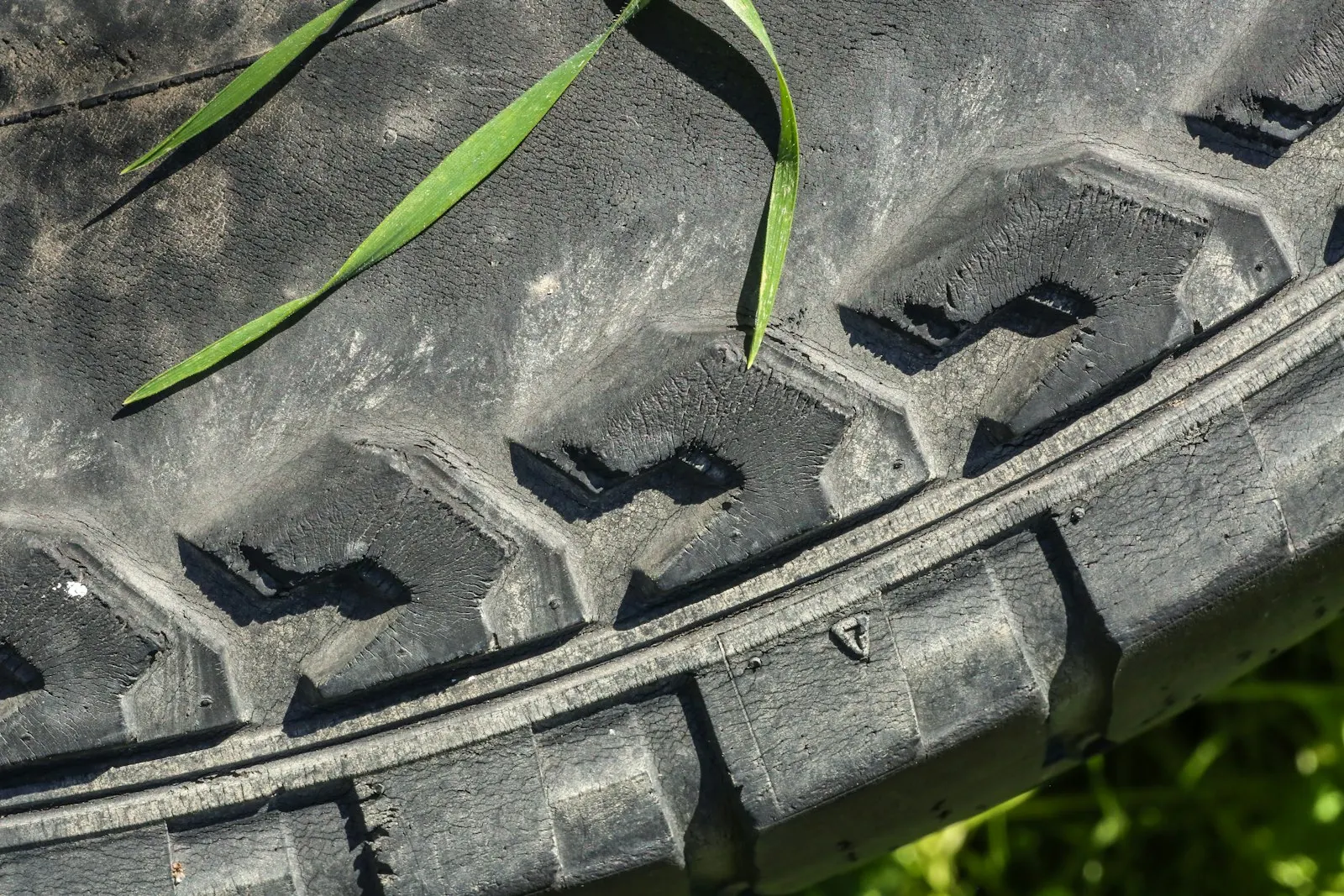
Sun damage shows up as fine cracks on the sidewall and between the tread blocks. A little surface checking is common on older tires. Deeper cracks you can catch a fingernail in are not normal, and neither are cracks near the bead where the tire meets the wheel.
When to replace for age
There is no single federal age limit for passenger car tires. The federal highway safety agency notes that some vehicle and tire makers recommend replacing tires between six and ten years after they were made, no matter how much tread is left. Your owner's manual or the tire maker's guidance is the place to check for your car.
In our climate, we treat the six-year mark as the time to start inspecting closely every visit. We recommend replacing sooner if we see cracking, bulges, or odd wear. A tire that has been repaired, run while low, or hit a pothole hard gets extra attention.
Do not forget the spare. It ages the same as the others, even if it has never touched the road. A spare that is ten years old may not be something you want to drive on at highway speed when you finally need it.
A five-minute monthly check
Check pressure once a month and before long trips, with the tires cold. Use the number on the sticker inside the driver's door, not the maximum pressure printed on the tire. That maximum is a limit, not a target.
Look at the sidewalls for cracks, bulges, and cuts. Look at the tread for uneven wear. Worn outer edges usually mean low pressure, a worn center means too much pressure, and wear on only one edge usually means an alignment problem.
Every tire has wear bars molded into the grooves at 2/32 of an inch. When the tread is flush with those bars, the tire is done. In heavy rain, grip drops well before that point, so do not wait for the bars if you drive in our summer storms.
Buying tires for a hot climate
Match the size, load rating, and speed rating on your door sticker. Heavier vehicles, trucks, and EVs need the right load rating. A tire that is fine on a light sedan can overheat under a heavier car.
If you replace only two tires, the newer pair usually goes on the rear unless your manual says otherwise. When the rear tires lose grip first, the car is harder to control, especially on wet pavement.
Get an alignment check with new tires. A car that is out of alignment can chew through a brand-new set far sooner than it should. It protects the money you just spent.
How we handle tire age
When we install tires, we write the date code on your invoice, so you always know how old they are without crawling around the car. When we inspect your car for any reason, we check the date codes and tell you if a tire is getting close.
Parking habits help too. A shaded spot or a garage keeps tires cooler and slows aging. If a car will sit for weeks, keep the tires at the right pressure and move it now and then so the same spot is not always carrying the load.
If you are shopping for a used car, check the tire dates as part of your inspection. A car with good-looking tires that are eight or nine years old will need a new set soon, and that cost belongs in the price you offer.