
Sounds that mean something
A high-pitched squeal when you brake, one that stops when you let off the pedal, is often the wear indicator. That is a small metal tab built into the pad on purpose, so it squeals when the pad gets thin. It is a reminder, not an emergency. Book a brake check soon.
Grinding or a harsh scraping sound is different. It usually means the pad material is gone and metal is rubbing on metal. Every stop now cuts into the rotor, and a pad-only job is turning into pads, rotors, and maybe more. Get it in right away.
A clunk or knock when you brake can point to loose hardware or worn suspension parts. A light squeak on a humid morning is usually just surface rust on the rotors, and it goes away after a few stops.
Feels and warning signs
A pulsing brake pedal, or a steering wheel that shakes when you slow down from highway speed, usually means the rotors are worn unevenly. It gets worse over time and can make the car take longer to stop.
A soft or spongy pedal, or one that sinks slowly toward the floor while you hold it, can mean air or moisture in the fluid, a leak, or a failing master cylinder. That is a stop-driving problem. So is a red brake warning light that stays on after the parking brake is released.
If the car pulls to one side when you brake, a caliper may be sticking or a brake hose may be collapsing inside. A hot, burning smell after normal driving, or one wheel much dustier than the others, points the same way.
Pads, rotors, calipers, and fluid
Pads are the part designed to wear. Each vehicle maker lists a minimum thickness, and a real inspection measures the pads instead of glancing through the wheel. The inside pad, the one you cannot see, often wears faster than the outside one.
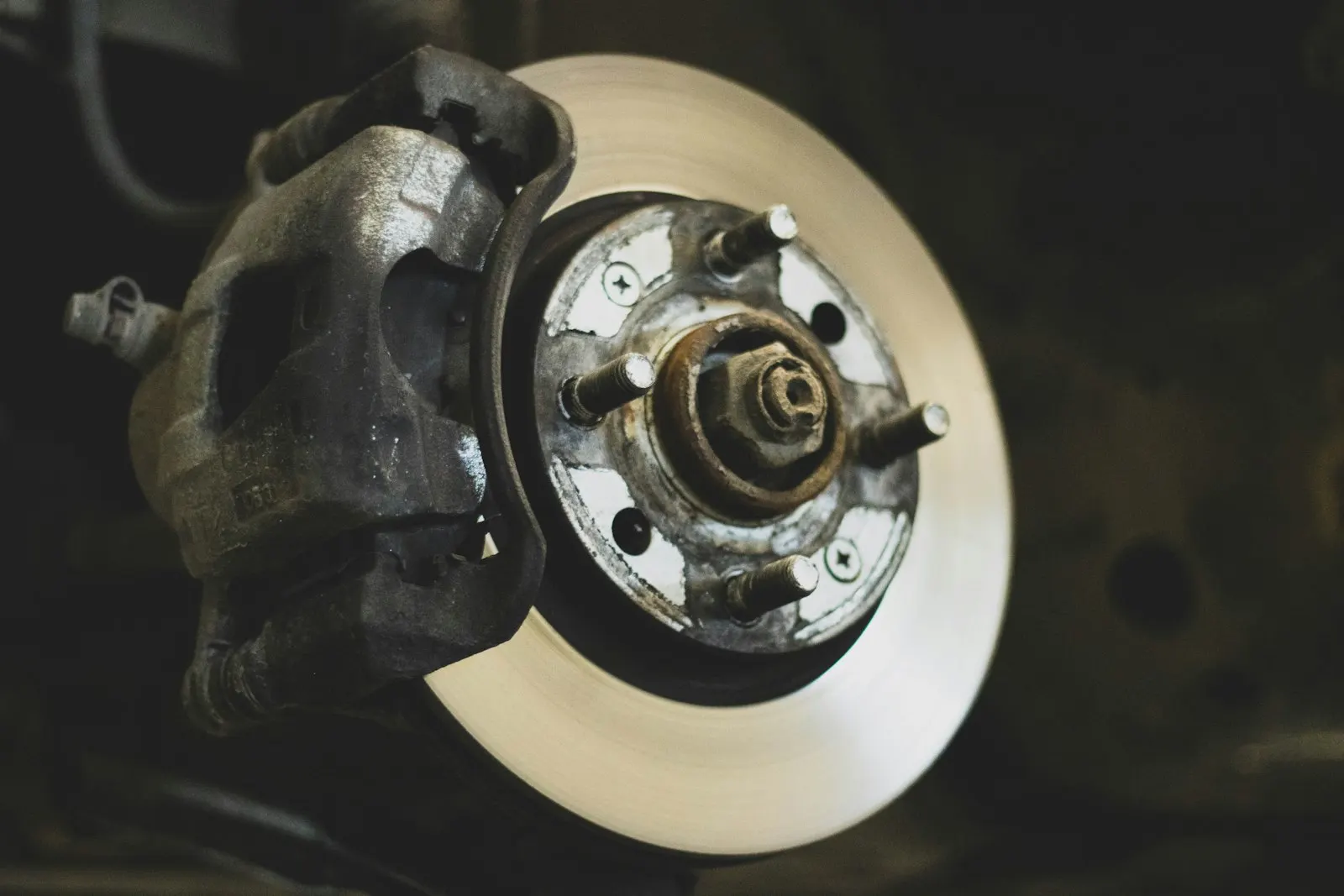
Rotors are the discs the pads squeeze. Some can be resurfaced if there is enough metal left. Many modern rotors are thin from the factory and are replaced along with the pads. Every rotor has a minimum thickness stamped on it, and we measure against that number.
Calipers hold the pads and push them against the rotor. They can seize or drag, especially on cars that sit for long periods or live near saltwater. A dragging caliper wears out pads fast and costs you fuel.
Brake fluid absorbs moisture from the air over time. Wet fluid boils at a lower temperature, which can make the pedal go soft on a long, hot stop, and it corrodes parts from the inside. Many makers set a time interval for changing it. In Miami humidity, it is worth following.
Why city driving wears brakes faster
How long a set of brakes lasts depends on how and where you drive more than anything else. Stop-and-go traffic, frequent short trips, and heavy loads wear them fastest. Long highway runs barely touch them.
Heat plays a part too. Braking over and over in traffic on a hot day raises brake temperatures, and hot pads wear faster. Heavier vehicles, like trucks, big SUVs, and EVs, put more work on the brakes every time they stop.
That is why nobody can give you an honest mileage number for your brakes without looking. Two identical cars can need pads at very different times. The right answer comes from measuring.
Habits matter as much as traffic. Riding the brake pedal, braking late and hard, and following too closely all turn more of your driving into braking. Leaving space ahead of you and coasting up to red lights is the cheapest way to make a set of brakes last.
EVs and hybrids: less wear, different problems
EVs and hybrids use regenerative braking, which slows the car with the electric motor and puts energy back into the battery. The pads do much less of the work and often last a long time.
The catch is that brakes that barely get used can rust. Calipers stick, rotors get pitted, and pads glaze over. On these cars, cleaning and lubricating the caliper slides and checking how freely the calipers move matters as much as pad thickness.
If you drive an EV or a hybrid, have the brakes inspected on a regular schedule even if they seem fine. Using the friction brakes firmly now and then, when it is safe, also helps keep the surfaces clean.
What a real brake inspection includes
We take the wheels off. We measure pad thickness on the inside and outside of each wheel, measure rotor thickness, and look for uneven wear. We check hoses and lines for cracks and leaks, check the caliper slides, and test the fluid.
You get a written estimate with the measurements, and it separates what needs to be done now from what can wait. Florida law requires a written estimate before repair work that will cost more than $150, unless you waive it in writing. You approve each item before we start.
You can ask to see or keep the old parts. Florida law gives you that right, and we are glad to show you why a part was replaced.
After the brake job
New pads and rotors need a short break-in so the pad material settles evenly onto the rotor surface. We will tell you if your parts call for a specific break-in, and it usually just means avoiding hard stops for a little while.
Pay attention for the first few days. The pedal should feel firm and the car should stop straight. If anything feels different from what you expected, call us and bring it back. A good brake job should feel right from the first drive.