
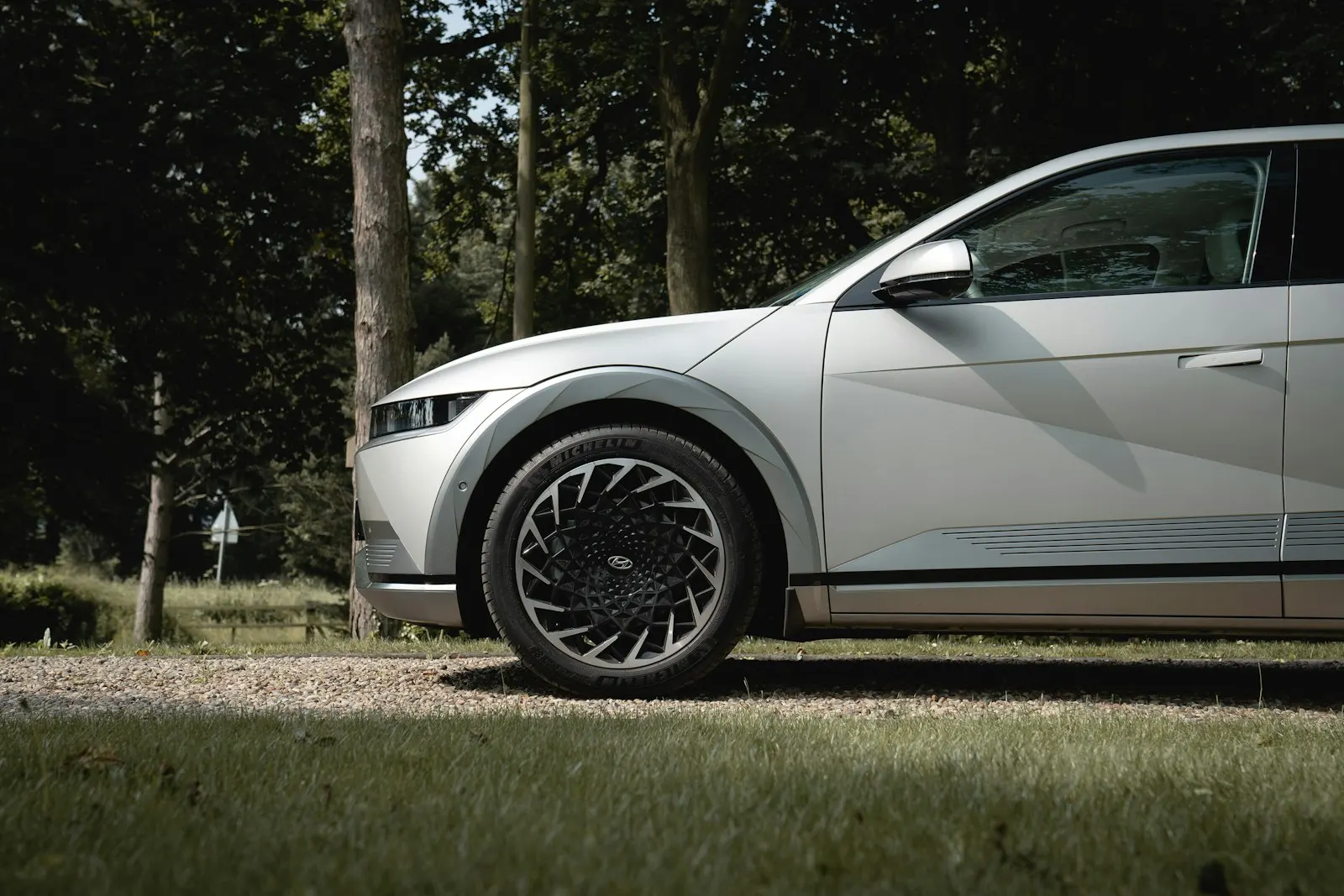
Weight: the battery rides on your tires
An EV usually weighs more than a gas car of the same size, because the battery pack is heavy. Every tire carries more load, which means more flex, more heat, and more scrubbing in every turn and every parking lot maneuver.
That weight sits low in the car, which is great for handling but does not make it any easier on the rubber. Heat from Miami pavement stacks on top of the heat the tire builds on its own.
This is why load rating matters so much. Tires made for EVs, and many replacement tires for them, are built with higher load capacity. A tire without the right rating can wear fast, run hot, and in the worst case fail.
Torque: instant power, instant wear
An electric motor delivers full torque from a stop. Every quick launch from a red light shaves a little rubber off the driven tires. It is fun, and it costs tread.
Regenerative braking puts force through the tires in the other direction when you lift off the pedal. Stronger regen settings are good for range and for brake life, and they add some wear to the tires on the driven axle.
Rear-drive and dual-motor cars wear the front and rear tires differently. The fronts take the steering and the rears take much of the power. That uneven pattern is one more reason rotation matters.
The factory tire was chosen on purpose
EV makers usually pick factory tires for low rolling resistance, low noise, and high load capacity. Many have a foam layer inside to cut road noise, and some carry markings showing they were built for that specific vehicle.
A cheaper tire without those traits can cut your range, add cabin noise, and wear out faster under the weight. That does not mean you must buy the most expensive tire on the market. It means matching the size, load rating, and speed rating, and knowing what you give up if you go another way.
Soft, grippy performance tires wear fastest of all. If most of your driving is city and highway commuting, a touring tire rated for your car's weight is usually the better fit and lasts longer.
Rotation and alignment are not optional
Rotate on the interval in your owner's manual. Many EV makers call for rotation more often than drivers expect. Some cars have different tire sizes front and rear, which limits how they can be rotated, so the pattern has to match the car.
Alignment matters more on a heavy car. A small error in toe or camber, multiplied by the extra weight, can wear the inside edge of a tire quickly. You usually cannot see that edge without getting on the ground, so it is often too late by the time you notice.
Potholes and curbs knock alignment out. If you hit one hard, or the steering wheel is no longer straight, get it checked. Some EVs also need specific steps or software resets after alignment and tire work, so make sure the shop has done that work on your model.
Pressure: the cheapest fix
Check pressure monthly with the tires cold, using the number on the door sticker. Low pressure on a heavy car builds heat fast and eats the outer edges of the tread.
Tires lose a little air over time, and pressure changes with temperature. The car's pressure warning usually waits for a real drop before it comes on, so do not wait for the light to check.
Many EVs have no spare tire, only a sealant and inflator kit or nothing at all. Know what your car carries before you need it, and keep a small plug-in inflator in the trunk.
Keep the tires at the right pressure even when the car sits. EVs often sit plugged in for days, and a tire that sits low in the heat ages faster.
Signs your EV tires need attention
More road noise than before, especially a rhythmic hum that changes with speed, often means uneven wear called cupping or feathering. Run your hand across the tread. If it feels smooth one way and like saw teeth the other way, have the alignment and suspension checked.
A drop in range on the same daily commute can come from low tire pressure or from a replacement tire with higher rolling resistance. Check the pressure first. It is the cheapest thing to rule out.
A steering wheel that sits off-center, a pull to one side, or a vibration at highway speed all point to alignment, wheel balance, or a damaged tire. Do not wait for the next rotation to have it looked at. On a heavy car, a small problem becomes a worn-out tire quickly.
Habits and service that stretch each set
Ease off the launches from a stop. Take corners and on-ramps smoothly, and avoid scraping curbs when you park. Each of these sounds small, and together they add up to real tread.
Look at the inner edges of the tires every few weeks. Turn the steering wheel all the way to one side and you can see the front tires' inner shoulders. That is where alignment wear hides.
We check the load and speed ratings on your tires against what your car requires, set pressure to spec, and rotate using the pattern your car allows. We check alignment on equipment set up for your model and make adjustments where the car allows them.
We also reset or relearn the tire pressure sensors when needed, so the car knows where each tire sits. When it is time for new tires, we give you options that match your car's requirements and tell you plainly what changes with each one, from range to noise to tread life.