
Start early, not when the cone shows up
The Atlantic hurricane season runs from June 1 to November 30. The worst time to fix a car is the two days before a storm. Batteries and wiper blades sell out, gas lines wrap around the block, and every shop in town is booked solid.
Do the checks below at the start of the season. Then repeat the quick version any time a storm shows up in the forecast. If something needs a part, you still have time to get it.
If your car is already due for service, June is a smart time to do it. One visit can cover most of this list, and you go into the season knowing where you stand.
The mechanical checks that matter in a storm
Battery. Miami heat is hard on batteries, and a storm is the worst time for one to quit. Ask for a load test, not just a voltage reading. A battery that starts the car today can still fail after a few days of heat and short trips.
Tires. Check tread and pressure on all four, plus the spare. After a storm the roads are full of nails, screws, and broken glass. Make sure the jack and lug wrench are in the car, and that you know where the wheel lock key is if you have locking lug nuts.
Wipers and lights. Wiper blades crack fast in the sun, so replace them if they streak or chatter. Walk around the car with the lights on and check headlights, brake lights, turn signals, and hazards.
Cooling system. Evacuation traffic means hours at low speed with the A/C running, which is hard on the cooling system. Check the coolant level only when the engine is cold, and have a leaking hose or a loud fan looked at before you depend on it.
Fuel, charge, and what goes in the trunk
Fill the tank when a storm is a few days out, not the night before. Stations get long lines before a storm and can lose power after one. Keep it topped up until the threat passes.
If you drive an EV or a plug-in hybrid, charge to full if there is any chance you will evacuate. Plan where you could charge along the route, and remember that chargers need power too. If you are staying and the car is parked where water could reach it, moving it to higher ground matters more than the charge level.
Keep these in the car: a phone charging cable, a flashlight, drinking water, a basic first aid kit, jumper cables or a jump pack, a tire inflator that plugs into the car, work gloves, and a paper map of your route. Put the registration, your insurance card, and a photo of your title in a waterproof bag.
Where to park when the storm is coming
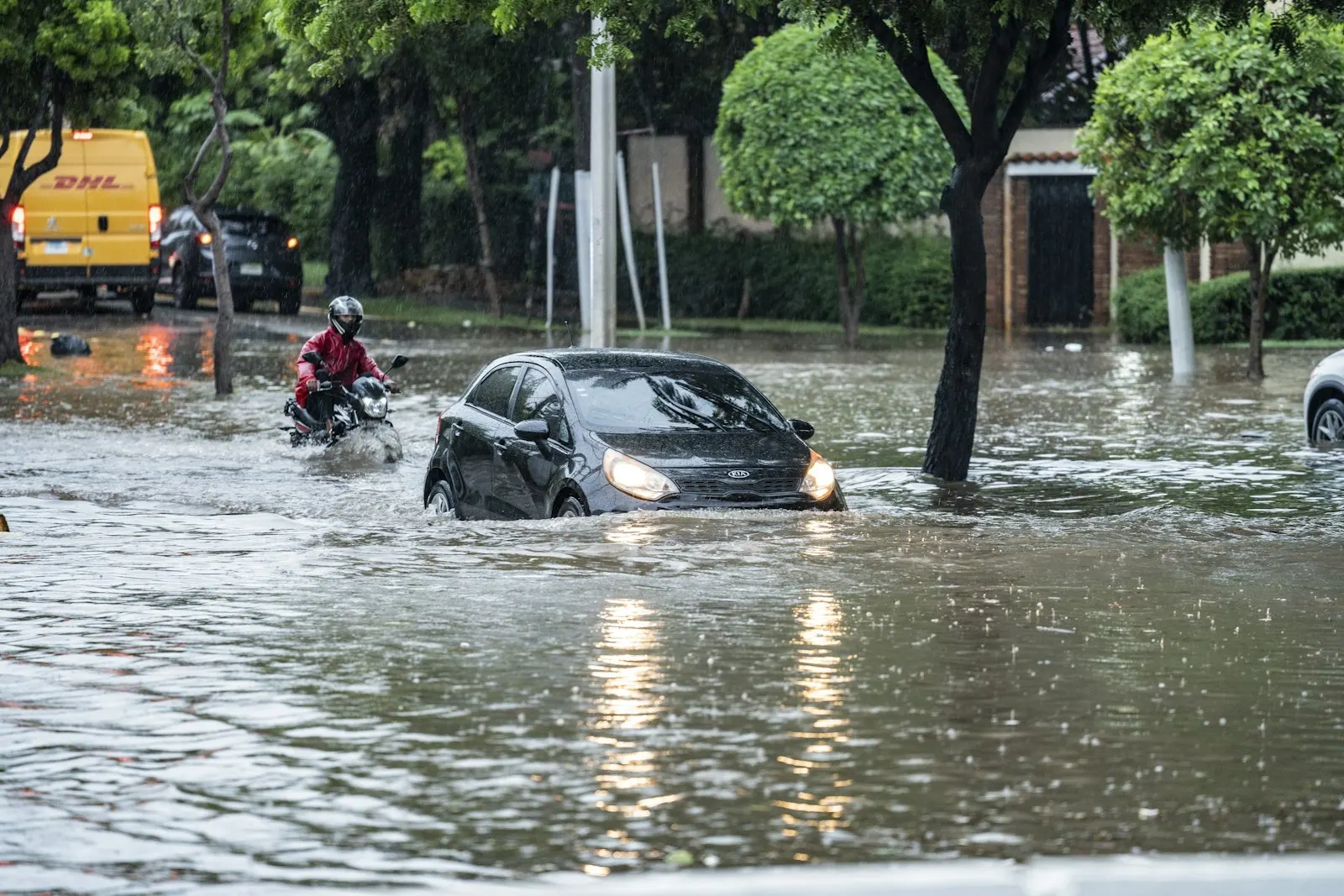
In South Florida, flooding usually does more damage to cars than wind. Know whether you live in an evacuation zone, and whether your street floods in a normal heavy rain. If it floods in an afternoon storm, it will flood in a hurricane.
Look for higher ground: an upper level of a parking garage, or a driveway on a higher street. Stay away from trees, power lines, and anything loose that can fly. Skip flimsy carports that can fold in high wind.
Ask your building or your city about storm parking before you need it. Some garages close to the public during storms, so have a second option ready.
Before the storm, take photos and a short video of the car inside and out, with the odometer showing. If you need to file a claim later, you have proof of how the car looked.
After the storm: check before you drive
Walk around the car first. Look for water lines on the doors or the inside of the windows, mud on the seats or carpet, and a musty smell. If water got above the door sills, do not start it. Have it towed and inspected. Starting an engine with water inside can turn a repair into an engine replacement.
If the car stayed dry, still check the tires for nails and cuts, look under the car for fresh leaks, and test the brakes at low speed before you head out. Downed lines and debris hide in standing water, so go around it.
EVs and hybrids that sat in water, and saltwater most of all, need a professional inspection before you charge or drive them. Saltwater can damage high-voltage parts, and problems can show up days or weeks later. Until it is checked, park it outside and away from buildings and other cars.
Check the cabin and trunk for water even if the outside looks fine. Hours of sideways rain can push water past a tired door seal or a clogged sunroof drain. Pull up the floor mats and press on the carpet. If it is damp, dry it fast with fans and open windows, or have the carpet pulled and dried, before mold sets in.
Claims, damage, and getting it fixed
Call your insurance company as soon as you can. Flood damage and damage from falling trees are usually handled under comprehensive coverage, if you carry it. Read your policy or ask your agent what applies to you.
Use your before and after photos. Write down the date, where the car was parked, and how high the water got. If you carry comprehensive coverage, Florida law says your deductible does not apply to windshield damage, so a cracked windshield from flying debris is worth reporting.
At GO TIME we handle storm damage from both sides: mechanical and electrical checks in the service bays, and body and collision work in the body shop. We inspect the car, write down what we find, and work with your adjuster. Bring it in early, before a wet carpet turns into mold or a small leak turns into a big bill.