
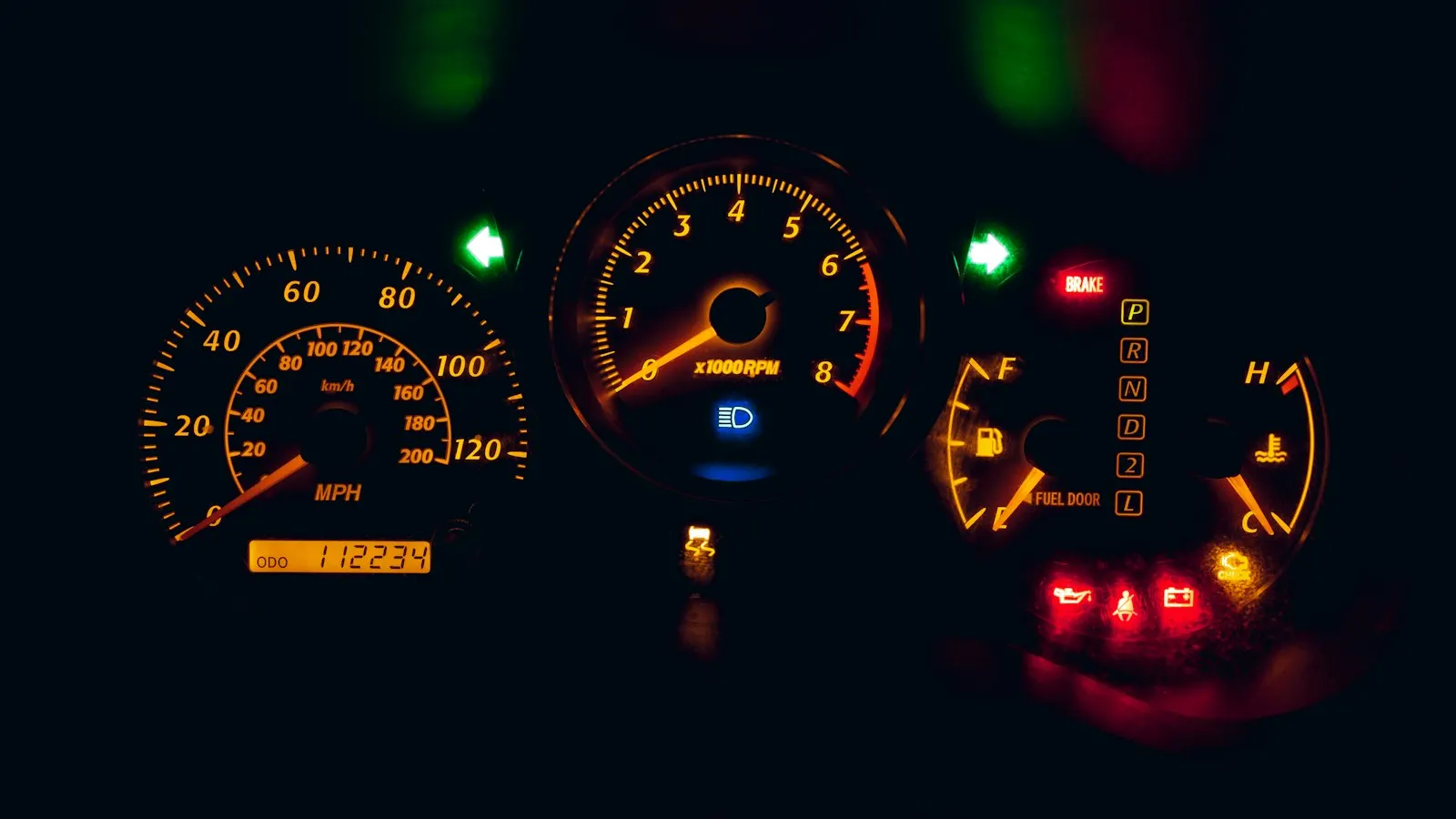
Steady or flashing: the first thing to know
A steady light means the car's computer found a fault that can affect emissions or how the engine runs. Most of the time the car still drives normally. Book a check within a few days, and sooner if the car starts running differently.
A flashing light usually means the engine is misfiring badly. Unburned fuel is going into the exhaust, where it can overheat and destroy the catalytic converter, one of the more expensive parts under the car. Slow down, get off the road when it is safe, and have the car checked or towed before you drive further.
Red warnings for oil pressure or engine temperature are separate lights, and they are more urgent than either. If one of those comes on, pull over as soon as you safely can and shut the engine off. Driving on low oil pressure or an overheating engine can ruin it in minutes.
One more light worth knowing. On many cars, a wrench symbol or a maintenance message is not the check engine light at all. It is a service reminder based on time or mileage. Check your manual if you are not sure which light you are looking at.
What the light is connected to
Since the 1996 model year, cars and light trucks sold in the US have used a standard onboard diagnostic system called OBD-II. It watches sensors across the engine, fuel system, ignition, and emissions equipment, all day, every drive.
When a reading falls outside the range the computer expects, it stores a trouble code. If the fault repeats or is serious enough, it turns on the light. The code is a starting point, not an answer. A code like P0171, for example, says the engine is running lean on one side. It does not say why.
Lean can mean a vacuum leak, a weak fuel pump, a dirty airflow sensor, a clogged injector, or an exhaust leak fooling a sensor. That is five different repairs from one code. It is the reason reading the code is not the same as finding the problem.
The most common causes
A loose or worn gas cap, or a small leak in the fuel vapor system. If you just filled up, check the cap. The light can take several days of driving to turn off on its own after the cap is fixed.
Oxygen sensors, the mass airflow sensor, or a vacuum leak from a cracked rubber hose. Heat makes rubber hoses and intake parts crack sooner here than in cooler places.
Ignition problems, like worn spark plugs or a failing ignition coil, cause misfires and often the flashing light. Catalytic converter codes are common too, but the converter is not always the real problem. A misfire or a bad sensor upstream has to be fixed first, or a new converter can fail the same way.
Transmission, exhaust gas recirculation, and evaporative system faults can also turn on the light. Hybrids and EVs have their own warning systems and codes that basic readers do not show.
What to do right now
Notice what changed. Is the car running rough, losing power, shaking at stoplights, smelling like fuel, or making new noises? Is the temperature gauge normal? Write down what you notice and when it happens. That information makes the diagnosis faster and cheaper.
Check the gas cap if you filled up recently. Look for any other warning lights on the dash, because two lights together often tell a clearer story than one.
Do not clear the code and hope it stays off. Clearing it erases the freeze frame data, a snapshot of what the engine was doing when the fault happened. It also resets the readiness monitors, which some inspections check, and it hides the evidence the technician needs.
Free code reads vs a real diagnosis
Plenty of places will read your code for free. That is fine as a first look. But a code reader gives you a code number and a guess. Buying parts based on that guess is how people end up replacing three sensors and still seeing the light.
A real diagnosis starts with the code and the freeze frame data, then looks at live sensor readings while the engine runs. It adds tests like a smoke test for vacuum leaks, a fuel pressure check, and checking the actual wiring and connectors for damage or corrosion.
It takes time and training, and the result is a clear answer: what failed, why it failed, and what fixes it. We give you the diagnostic charge up front on a written estimate, show you what we found, and quote the repair before any work starts.
When you can wait and when you cannot
It can usually wait a few days if the light is steady, the car runs normally, and no other warnings are on. Still get it checked. Small problems like a vacuum leak can hurt fuel economy and slowly damage other parts.
Get it checked today if the light is steady but the car runs rough, hesitates when you accelerate, or you smell fuel.
Stop driving if the light is flashing, the temperature or oil warning is on, you see heavy smoke, or you hear loud knocking. A tow costs far less than a new engine or a new catalytic converter.
After the repair
Once the repair is done, the light should go off, either right away when the code is cleared after the fix or after a few drive cycles as the computer rechecks the system. We confirm the repair with a test drive and a fresh scan.
If the light comes back, bring it back. Sometimes a car has two faults and the second one only shows up after the first is fixed. A good shop tells you that possibility up front instead of acting surprised.
Keep the invoice with the code, what was found, and what was replaced. If the same code shows up months later, that history saves diagnostic time and tells us right away whether it is the same failure or something new.