
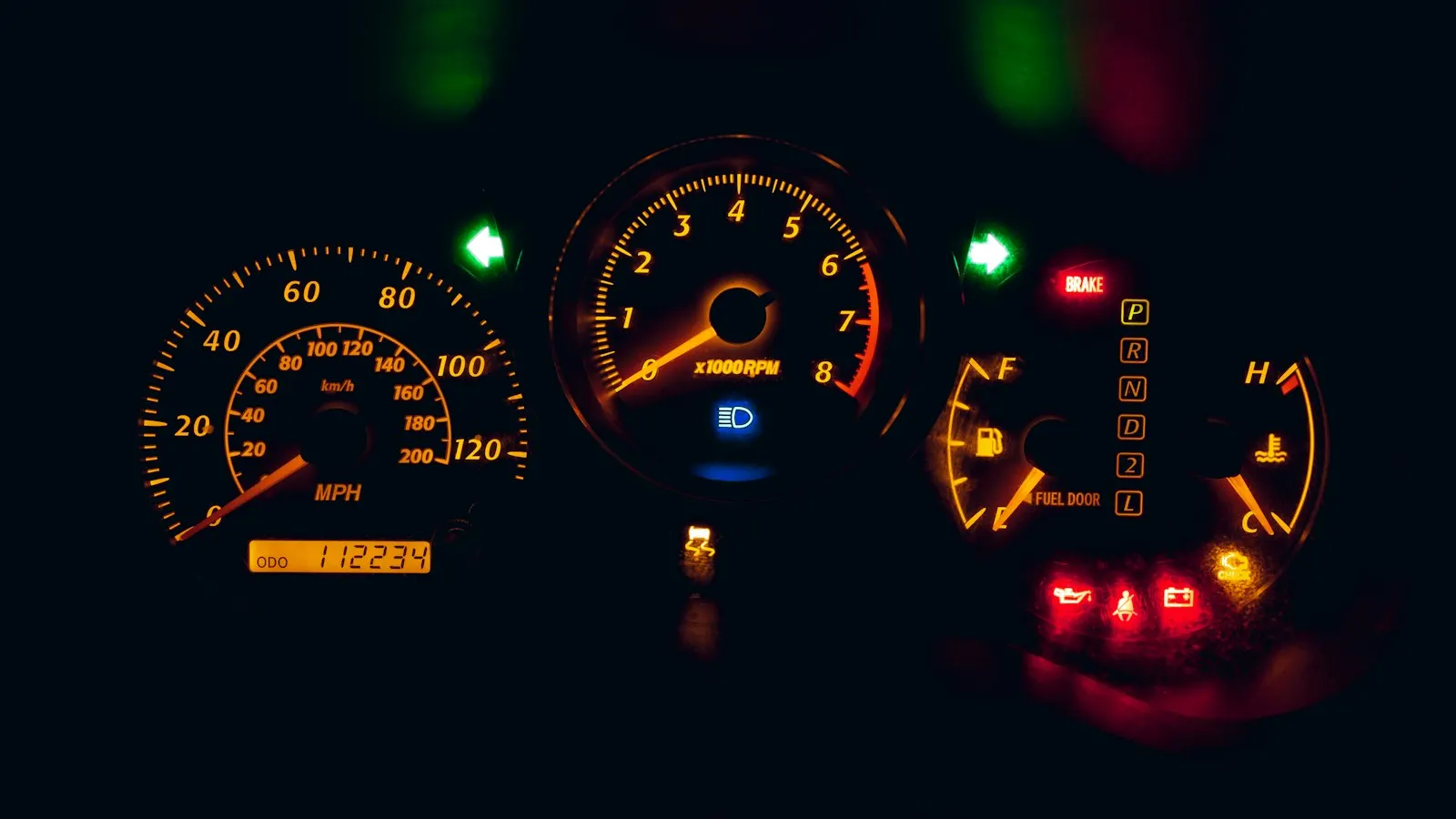
The check engine light came on
The engine computer saw something out of range and stored a code. The code is a clue, not a diagnosis. The most common ones here are a loose gas cap or evaporative leak, a misfire, an oxygen sensor reading off, or a catalytic converter losing efficiency. The light looks the same for a loose gas cap and for a major repair. What matters is what we find behind the code.
What to do right now
- 1Look at how the light behaves. Steady means note it and come in this week. Flashing means the engine is misfiring hard enough to melt the converter. Pull over, ease it home or to us, no highway.
- 2Tighten the gas cap until it clicks and drive a couple of days. If the code was an evap leak from a loose cap, the light may clear on its own.
- 3Note what else changed. Rough idle, loss of power, worse fuel economy, a smell of gas or rotten eggs. That context turns a code into a diagnosis faster.
- 4Do not clear the code with a cheap scanner before you come. It erases the freeze frame data that tells us what the engine was doing when it failed.
What it usually is
Check engine light
Full scan of all modules, freeze frame review, live data, and a real test of the suspect circuit. We find the cause, not just the code.
See the serviceTune-up and spark plugs
Misfire codes on high mileage cars are often plugs and coils. Miami heat and the Palmetto crawl are hard on both.
See the serviceCar diagnostics
When the code points at a sensor, we test whether the sensor is bad or is honestly reporting a problem somewhere else. That difference saves you a part you did not need.
See the service