

First, make sure it needs major work
Before you choose any of these, make sure the transmission actually needs major work. Leaks, solenoids, sensors, wiring, and software problems can all feel like a failing transmission. A proper diagnosis comes first.
It also helps to know what failed. A problem with a single part, like a solenoid, the torque converter, or the valve body that routes fluid inside, can sometimes be fixed on its own without replacing the whole transmission. When the damage is spread through the unit, such as burnt clutches with metal debris throughout, that is when the three options below come into play.
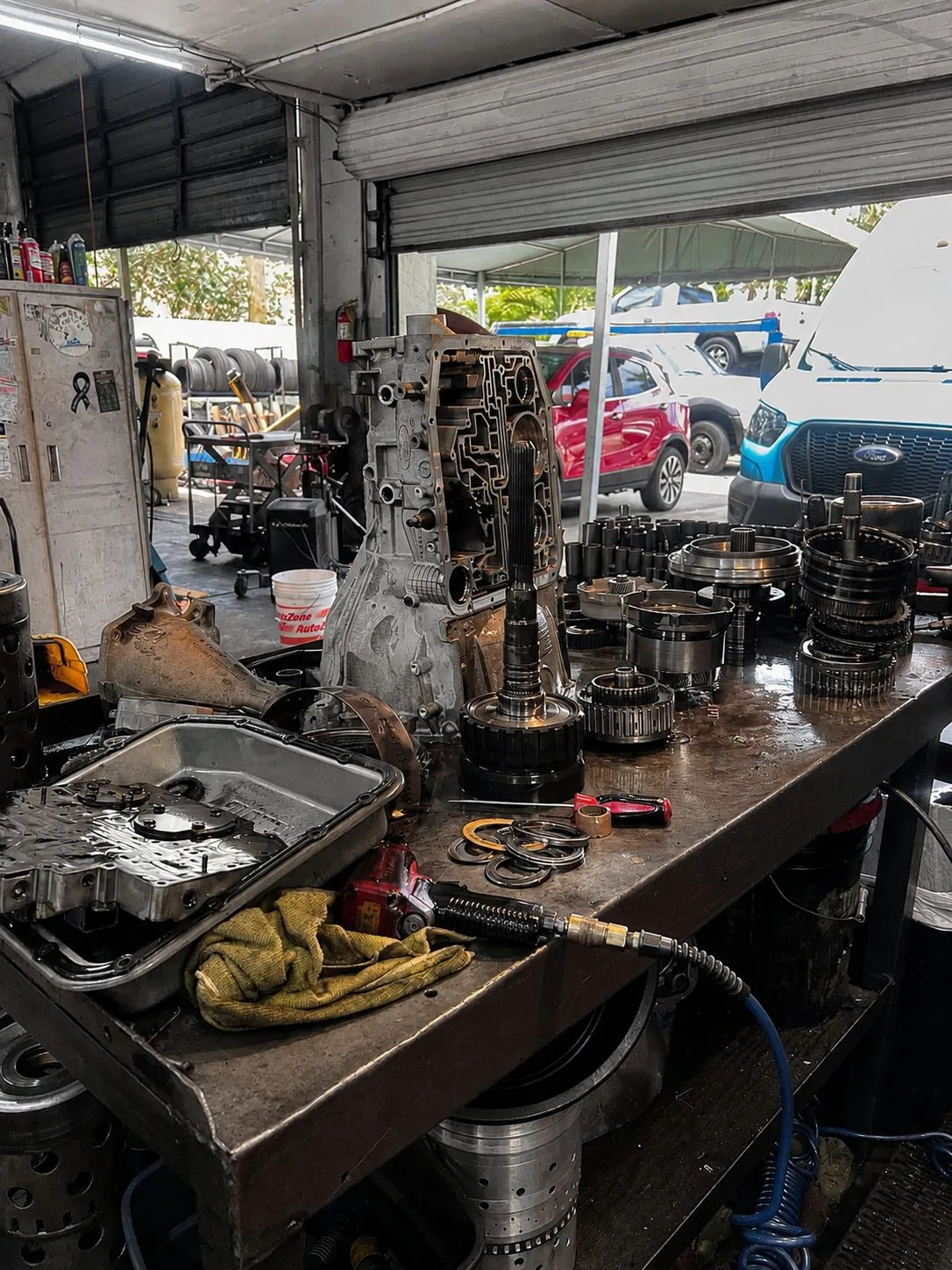
Rebuilt: your transmission, repaired
In a rebuild, the shop removes your transmission, takes it apart, and inspects every part. The soft parts are replaced, which means the clutches, seals, gaskets, and filters. Hard parts like drums, gears, shafts, and the valve body are checked, and anything damaged is replaced. The torque converter is addressed too, since it can hold debris from the failure.
A rebuild makes sense when replacement units for your vehicle are hard to find or costly, or when you want your original unit back. A properly rebuilt transmission can be very reliable, because the wear parts are new and the damaged parts are swapped out. Quality depends on the parts used and the work done, so ask what was replaced.
Keep in mind that the price can change if the teardown finds more damage than expected. A good shop stops and asks before going past the estimate.
Remanufactured: rebuilt to a set standard, off site
A remanufactured unit is rebuilt by a remanufacturing company, usually with set procedures and testing. Many remanufacturers also build in updated parts that fix known weak spots for that model. Your old unit is often sent back as a core, meaning it is returned so it can be rebuilt for someone else.
This is a good fit for common vehicles where a quality remanufactured unit is available, and for drivers who want predictable timing. Availability and shipping time vary by model. The unit carries the remanufacturer's own warranty, so ask what it covers and how claims are handled.
Used: a unit from another vehicle
A used transmission comes out of another vehicle, usually from a salvage yard. You buy it as it came out, with no rebuild work done, so it is often the lowest upfront cost and sometimes the fastest option for an older car. A used unit for a common model is usually easy to find. For less common vehicles, it can be harder.
The catch is the unknown history. You do not know how the donor vehicle was driven or maintained, and mileage records help but are not a guarantee. Ask where the unit came from, what mileage it had, and whether it will be inspected before it goes in. The warranty on a used unit is often shorter and more limited than on a rebuilt or remanufactured one.
Used makes sense for an older, lower-value vehicle, or when you only need the car to last a while longer. On newer vehicles, some owners go the other way and choose a brand-new unit from the carmaker.
What every option should include
Whatever you choose, the transmission cooler and its lines should be flushed or replaced. When a transmission fails, metal and friction debris can get trapped in the cooler. If it is not cleaned out, that debris flows straight into the new or rebuilt unit.
Many newer vehicles also need the transmission computer programmed, or a relearn done, after the swap. Make sure that is part of the plan and the price. Ask what is included in each option: fluid, the cooler flush, the torque converter, programming, and a road test at the end.
How to choose
Start with a real diagnosis that confirms internal work is needed. Then think about the car's value and overall condition. A major repair on a car with a failing engine or heavy rust may not make sense.
Think about how long you will keep it. If you plan to drive it for years, a rebuild or a remanufactured unit is usually the stronger choice. If you only need an older car to last a while longer, a used unit can be the smarter spend.
Ask about availability, because some units ship in days and others take much longer. The total time depends on the vehicle and how fast the unit or parts arrive, and back-ordered parts are the usual reason a job runs long. When the timing varies, it should be written down with the price.
How GO TIME helps you decide
There is no single best choice for every car. A shop that always pushes a rebuild, or always pushes a used unit, is not looking at your situation. At GO TIME Auto Repair in Plantation, we diagnose first, then walk you through the tradeoffs on your car before you decide.
You get a written price for each option that makes sense, with photos of what we found, before any work starts. If the teardown turns up more damage, you get a photo and a separate price, and no is a normal answer. Tax is charged on parts only, and you get a text at each step.
You also pick the warranty length on the work: 90 days, 1 year, or 2 years. A remanufactured or used unit carries its own warranty from whoever supplied it, and that should be on paper before you approve. Compare warranties on paper, not just prices.