
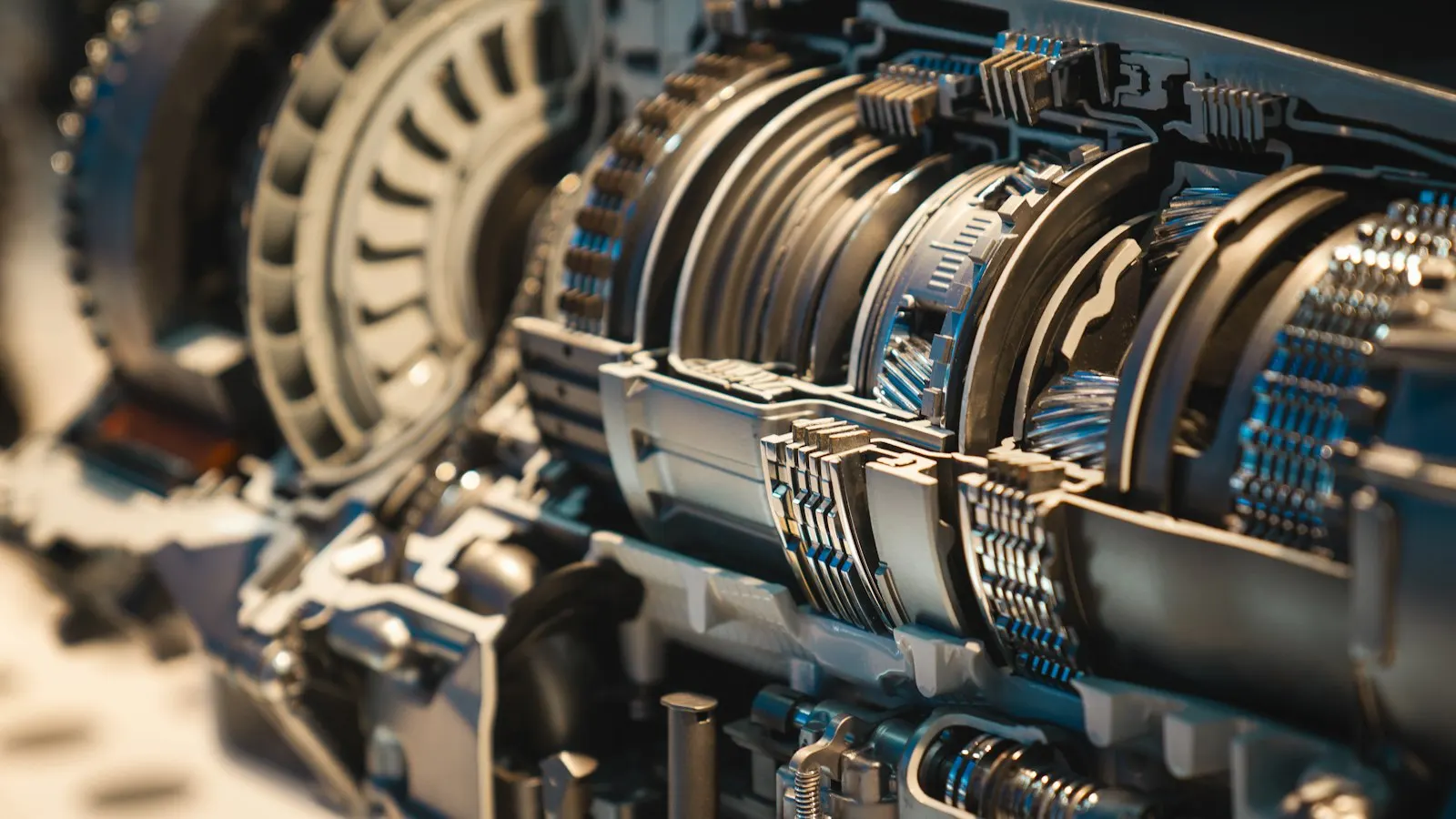
What slipping feels like
You press the gas, the engine revs higher, and the car does not pick up speed the way it should. Some drivers say it feels like the car slid into neutral for a second before it caught again. Others notice a shift that takes too long, with the RPMs flaring up between gears.
Other signs tend to come with it. The car feels weak pulling away from a light or merging onto I-95, or it drops out of gear while you are driving. You may smell something burning after a drive in traffic, or see the check engine light or a transmission warning light on the dash.
On an automatic, slipping often shows up first when the transmission is hot, like after a long crawl on I-595 at rush hour. On a manual, a slipping clutch usually shows up in the higher gears when you press the gas hard. Either way, slipping is a symptom, not a diagnosis, and the cause can be small or serious.
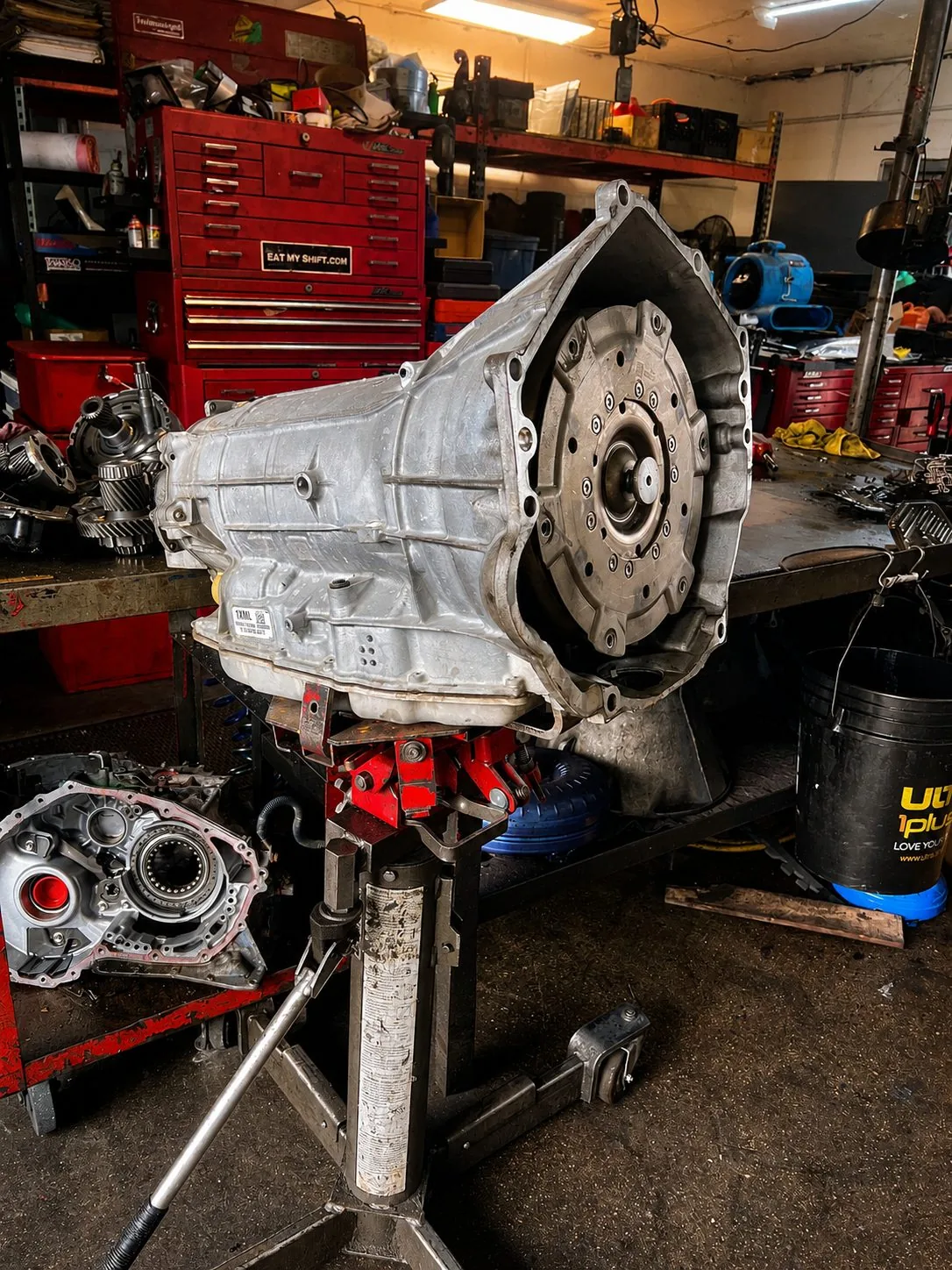
Low fluid and leaks: check these first
Automatic transmission fluid does three jobs at once. It cools the transmission, lubricates the moving parts, and creates the hydraulic pressure that applies the clutches inside. When the level is low, there is not enough pressure to hold a gear firmly, and the transmission slips.
Old, burnt fluid causes trouble too, because it no longer cools or protects the way it should. That is why the fluid is the first thing to check, and sometimes it is the whole problem.
Transmission fluid is not supposed to get used up. If the level is low, it went somewhere. The usual leak spots are the pan gasket, the cooler lines, the axle seals, and the seals at the front and rear of the transmission. If the transmission was not damaged by running low, fixing the leak and refilling with the correct fluid can be a fairly simple repair. Fix the leak, not just the level.
Solenoids, software, and the valve body
A modern automatic is run by a computer. It uses electric valves called solenoids to send fluid through the valve body, a block of passages that decides which clutches apply and when. A solenoid that sticks or fails electrically can cause harsh shifts, late shifts, or slipping.
These parts can often be replaced without rebuilding the whole transmission. Some carmakers have also released software updates for shifting complaints on certain models, and checking for one is part of a proper diagnosis before anything bigger gets quoted.
Worn parts inside, or a worn clutch
Inside an automatic are clutch packs and, in some designs, bands. Their friction material wears over time, and once it is worn or burnt, the transmission cannot hold a gear under load, no matter how good the fluid is. A failing torque converter, the fluid coupling between the engine and the transmission, can also cause shudder and slipping.
Internal wear like this usually means a rebuild or a replacement unit. But slipping does not always end there. Low fluid, a leak, a bad solenoid, or a software problem can all cause it and cost far less, which is why the diagnosis matters.
If you drive a stick shift, slipping usually comes from a worn clutch disc, oil on the clutch, or a hydraulic problem that keeps the clutch from fully engaging.
What you can check yourself
Look under the car where you park for red or brown spots. If your car has a transmission dipstick, check the level and the condition using the steps in your owner's manual. Procedures vary by vehicle, and many newer cars have no dipstick at all.
Smell the fluid on the dipstick. A sharp burnt smell and a dark brown color mean it has been overheated. Then write down when the slipping happens: cold or hot, in which gear, or only when you accelerate hard. That note saves the technician a lot of time.
Do not keep adding fluid and hoping. If it keeps getting low, there is a leak that needs to be found. Use only the fluid type your carmaker specifies, because the wrong fluid can cause shifting problems on its own.
When to stop driving
Park it and get help if the car will not move in Drive or Reverse, if the slipping gets worse by the day, if you smell burning fluid, or if a warning light comes on and the car is shifting strangely. In those cases, have it towed or use your roadside plan instead of driving it in.
A slipping transmission will not fix itself. It may come and go as the temperature changes, but the cause is still there. Every slip makes heat, and heat plus the debris from worn parts is what turns a smaller repair into a full rebuild.
How GO TIME handles a slipping transmission
At GO TIME Auto Repair in Plantation, a slipping transmission starts with a diagnosis, not a guess. We check the fluid, scan the transmission computer for stored codes, watch live data, and road test the car. We also look for a software update from the carmaker before talking about anything bigger.
Then you get a written price before any work starts, with photos of what we found. If the fix is a leak and a fluid service, that is what we tell you. If it needs internal work, we explain the options: repair, rebuild, or replacement. Tax is charged on parts only. You pick the warranty length: 90 days, 1 year, or 2 years. And you get a text at each step, from check-in to ready.
If another shop told you that you need a whole transmission and could not explain how they got there, a second opinion is worth it. A good shop can show you what it checked and what it found.