

Why work vehicles are hard on transmissions
If you run delivery vans, box trucks or contractor pickups in Broward, you know what a down truck costs: missed routes, rescheduled jobs and a crew waiting around. Transmission problems are some of the longest and most expensive repairs a fleet faces, so preventing them pays off.
Work vehicles live the life owner's manuals call severe service. They carry heavy loads, stop and start all day, idle at job sites and sit in traffic on I-95 and I-595 in summer heat, and many pull trailers. A delivery van that stops dozens of times a day puts its transmission through far more engagements and heat cycles than a commuter car.
Each of those adds heat, and heat is what breaks down transmission fluid and wears internal parts. The good news is that most fleet transmission failures give warning signs first.
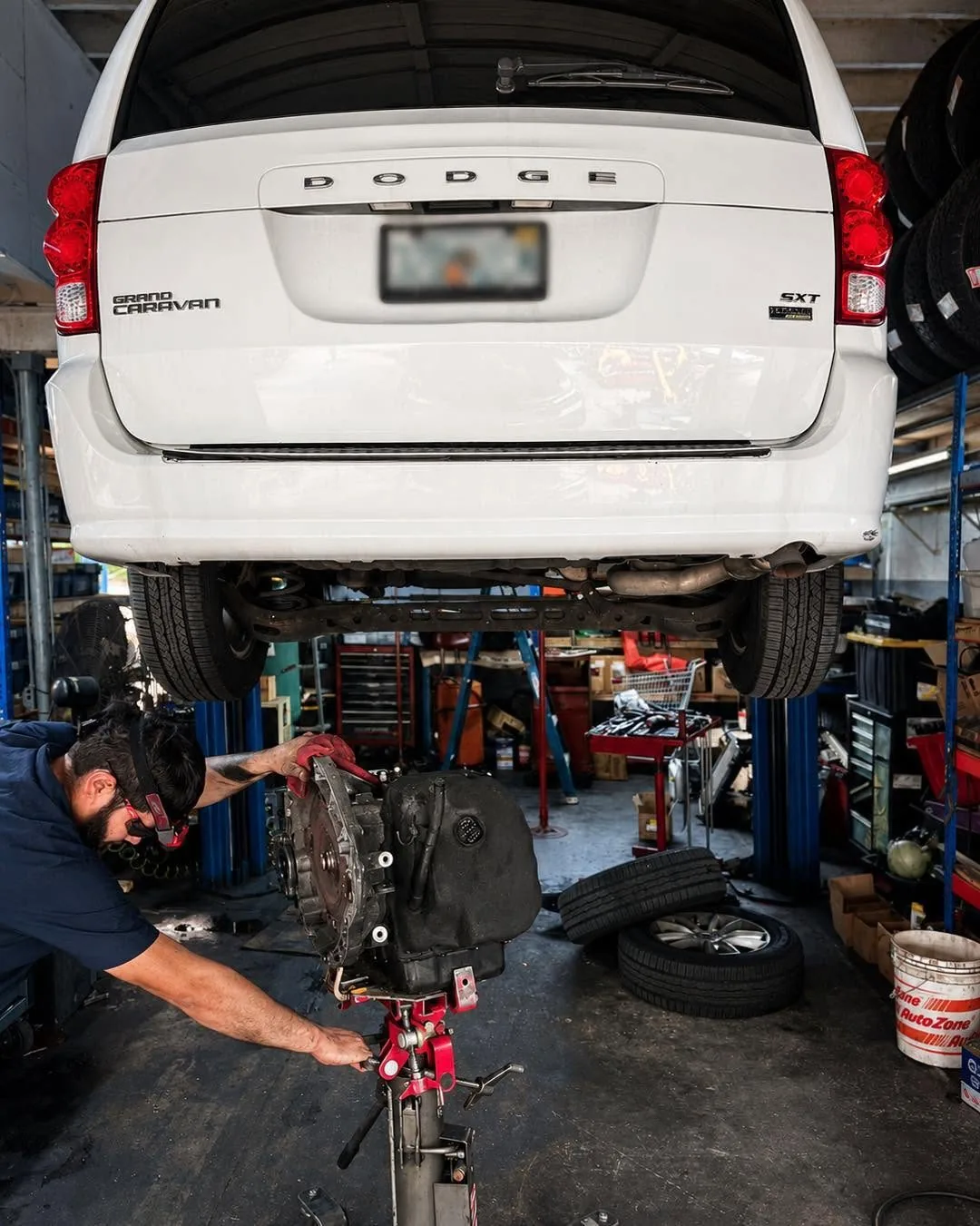
Put the fluid on the severe service schedule
The most useful single step is servicing the transmission fluid on each vehicle's severe service schedule, not the normal one. Tie it to mileage or engine hours, whichever your vehicles track best, log it, and use the exact fluid each manufacturer specifies.
At each service, have the shop look at the fluid condition and at what is in the pan, since that can reveal wear early. Check for leaks at every oil change. On vehicles with a dipstick, look at the color and smell of the fluid between services, not just the level.
Scans and coolers
Have the transmission computer scanned during routine service too. Some problems store a code before the driver ever feels anything.
Keep radiators and transmission coolers clean and clear. For vehicles that tow or run heavy loads all day in the heat, an auxiliary transmission cooler is often a smart addition. It lowers fluid temperature, which helps the fluid and the transmission last longer. Whether it makes sense depends on the vehicle and the work, so ask about your specific units.
Early signs drivers should report
Drivers are your best early warning. Ask them to speak up about slipping, flaring RPMs or late shifts, a delay when shifting into Drive or Reverse, harsh or clunky shifts, a shudder at steady highway speeds, a burning smell, red spots where the truck parks, or any warning light on the dash.
Make it easy to report, and make it clear nobody gets in trouble for it. When several drivers share a truck, problems go unreported because nobody feels it is theirs. A quick walk-around at the start of the day, looking under the truck for fresh drips, takes less than a minute.
Then pull the truck before it breaks. Early transmission repairs can mean a solenoid, a sensor or a leak. Late ones often mean a rebuild or a replacement, plus a tow and a missed route.
Driving habits that save transmissions
Come to a full stop before shifting between Drive and Reverse. Set the parking brake before shifting into Park, especially on a slope or a loading ramp, so the transmission is not holding the whole truck.
Stay within the rated payload and towing capacity. During long waits, shift into Park instead of idling in Drive with a foot on the brake. And never rock a stuck truck back and forth hard between gears.
Repair, rebuild or replace: decide per unit
When a unit needs transmission work, a clear diagnosis and a written estimate let you decide quickly whether to repair, rebuild or replace, based on the vehicle's value and how long you plan to keep it in service.
Better yet, decide ahead of time which units are worth a rebuild and which are near the end of their service life, so you are not making that call on the side of the road.
Transmission records make the call easier. For each unit, keep the service dates with mileage or hours, the fluid used, any codes found in scans, driver complaints and when they came in, and the repairs done with any warranty paperwork. Over time, they show which vehicles, routes or drivers are hardest on transmissions.
How we handle fleet transmissions
At GO TIME Auto Repair in Plantation, we work on box trucks, delivery vans and work trucks. Every unit gets a diagnosis first and a written price before any work starts, with photos of what we found, so whoever approves repairs sees what we see.
Sales tax is on parts only, and you pick the warranty length for the fleet: 90 days, 1 year or 2 years. You get a text at each step, including the moment each unit is ready. Fleet accounts get one monthly invoice with every repair order attached.