
Who needs it
The federal rule is 49 CFR 396.17. It says a motor carrier may not operate a commercial motor vehicle unless its parts and accessories have passed an inspection at least once during the preceding 12 months, and documentation of that inspection is on the vehicle.
For interstate operation, a commercial motor vehicle generally includes trucks with a gross vehicle weight rating or gross combination weight rating of 10,001 pounds or more, certain passenger-carrying vehicles, and vehicles hauling hazardous materials in amounts that require placards. Each trailer is a separate unit and needs its own inspection.
Florida applies the federal safety rules to many intrastate commercial vehicles as well, with some state-specific exceptions. If you only run inside Florida, confirm which rules apply to your weight class and type of operation before you assume you are exempt.
If you are not sure whether a pickup and trailer combination counts, look at the weight ratings on the door and trailer plates, not just what you usually haul. The definition uses the rating or the actual weight, whichever is greater.
What the inspector checks
The minimum standards are listed in an appendix to Part 396 of the federal rules. The main systems are brakes, coupling devices, exhaust, fuel system, lighting, safe loading, steering, suspension, frame, tires, wheels and rims, windshield glazing, and windshield wipers. Motorcoach seats apply to buses, and the rear impact guard applies to vehicles required to have one.
Brakes get the closest look: missing or broken parts, air leaks, cracked or worn linings, damaged drums and rotors, chafed or leaking hoses and tubing, and brake adjustment. Out-of-adjustment brakes are a common failure, so it pays to check them first.
Steering and suspension checks look for excessive play, cracked or broken springs, and loose or missing U-bolts and mounts. Frame checks look for cracks, broken welds, and sagging. Exhaust and fuel checks look for leaks and loose or missing mounts.
On combinations, coupling devices get a close look: fifth wheel mounting and locking parts, pintle hooks, drawbars, and the safety devices on full trailers. Windshields fail for cracks and damage in the driver's line of sight, and the wipers have to work.
Tires, wheels, and lights: the limits that fail a truck
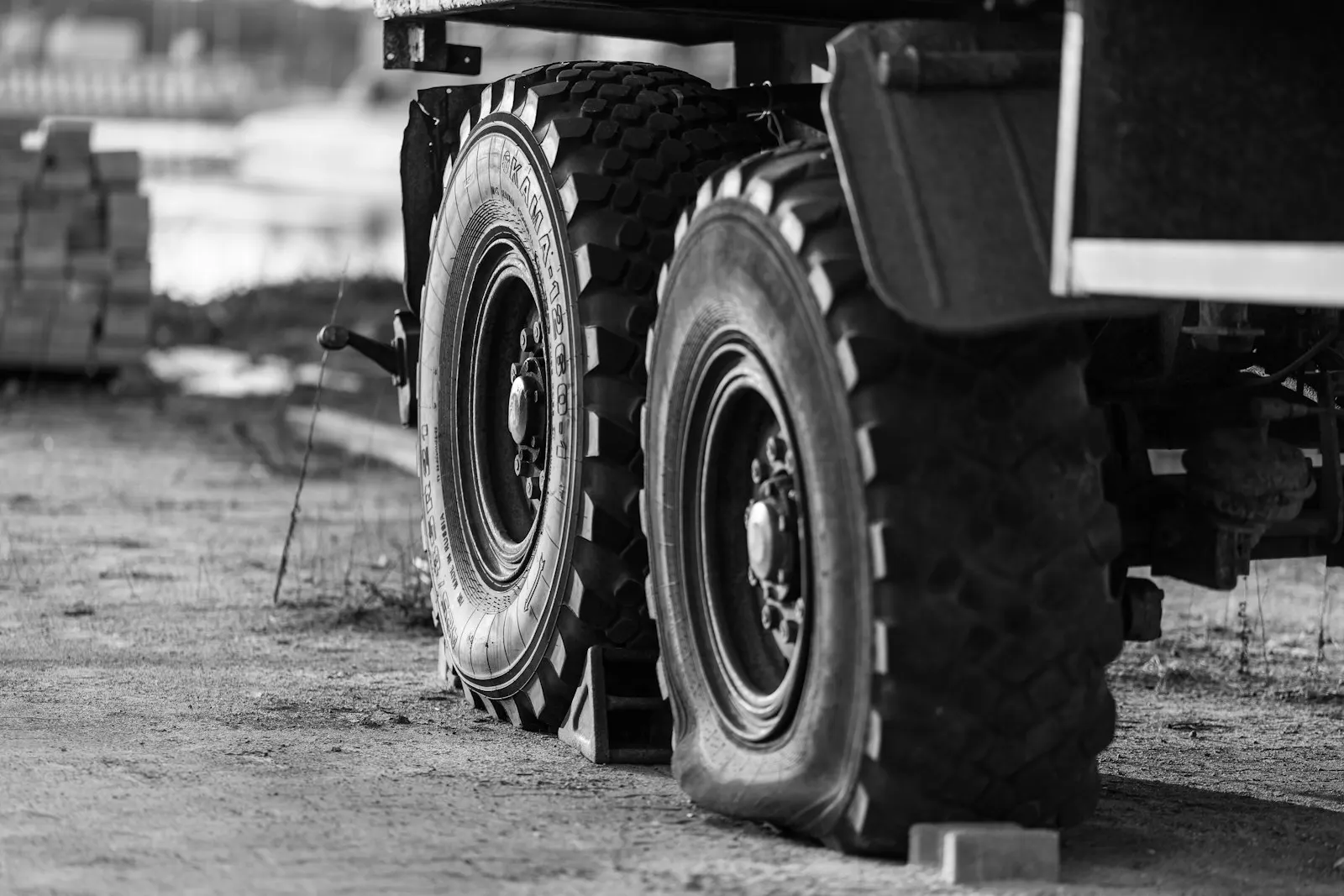
Steering axle tires fail with less than 4/32 of an inch of tread at any point on a major tread groove. Other tires fail below 2/32. Exposed belt or ply material, a tread or sidewall separation, a flat, or a leak you can hear or feel also fails.
Wheels and rims fail for cracks, loose or missing lug nuts, and elongated stud holes. Look for rust streaks running out from lug nuts. They often mean a nut has been working loose.
All required lamps and reflectors must work, including turn signals, brake lights, and clearance and marker lamps. Lights are the easiest items to fix and the most frustrating ones to fail on.
Paperwork: what to carry and keep
The inspection produces a report that identifies the inspector, the motor carrier, the date, the vehicle, and the components inspected, and certifies the result. Proof of the inspection must be on the vehicle. That can be a copy of the report or another form of documentation, like a sticker or decal, that meets the rule.
The motor carrier must keep the original or a copy of the inspection report for 14 months from the date of the inspection.
The person doing the inspection must be qualified under 49 CFR 396.19. The rule requires them to understand the inspection standards, know the methods, tools, and equipment, and have the training, certification, or experience it describes. Brake work has its own qualification rule. It is fair to ask any shop how its inspector qualifies.
Annual is the minimum, not the plan
The annual inspection is a floor. Federal rules also require carriers to systematically inspect, repair, and maintain their vehicles and keep records of that work.
Drivers must also prepare a written inspection report at the end of the workday when they find or are told about a defect, and the carrier has to fix it or certify that a repair was not needed before the vehicle runs again. Passing an annual inspection does not replace any of that.
Roadside inspections can happen any day. A truck that passed its annual last month can still be placed out of service for a defect that showed up this week. Pair the annual with a preventive maintenance schedule by miles or engine hours, and the annual becomes a formality instead of a surprise.
How to prepare so the truck is not down long
Walk the truck the day before. Check every light, tire tread and pressure, and lug nuts. Listen for air leaks with the brakes applied. Check the wipers and the windshield for cracks in the driver's view. Fix the easy things first.
Bring the last annual report and recent repair records. It speeds things up and shows what was already done.
Plan the timing. Do not wait until the month the current inspection runs out, because a failed item that needs a part can leave you without valid documentation. Book early enough to handle repairs.
How we handle DOT inspections
We inspect to the federal minimum standards, write down every item, and give you a written estimate for anything that fails. Repairs only happen with your approval.
When the vehicle passes, you get the inspection report and the documentation for the vehicle, and we can remind you before the next one is due. We also service the trucks, trailers, and diesel engines themselves, so a failed item can often be fixed in the same visit.
If you run several trucks and trailers, bring the list of unit numbers and inspection dates. We can help spread the inspections out so they do not all come due in the same month, which keeps more of your equipment working.